
The operator gives intent, not joint angles
Joystick, controller, hand tracking or voice: input becomes a velocity request, a hand target or a skill request. Balance and motors stay with the robot.
A velocity request, not a step pattern
Forward-back, sideways, turn. Steps, ground contact and balance are handled by the local motion controller.
Try it: press the buttons or the arrow keys.
vxvywzIn body-tracking mode the human’s posture and intent are mapped; because of proportions and stability, direct copying is usually not enough. A common setup: arms by the operator’s own motion, walking by joystick.
Running, jumping, kneeling, standing up: a verified skill started by a button or a voice command – if the robot and controller version support it. It has preconditions, state, abort rules and a result. In the G1 training jumping cannot start.
Target pose, inverse kinematics, clutch
The controller provides a target position and orientation; IK computes joint targets – respecting reach, joint limits and self-collision.
4Re-engage. A new reference offset from the current poses – no jump, work continues.
A three-finger hand, a five-finger hand and a parallel gripper each need their own robot profile. A controller drives basic grasps and open-close; tracked hands or gloves give more finger data – the robot’s mechanics decide how much can be executed.
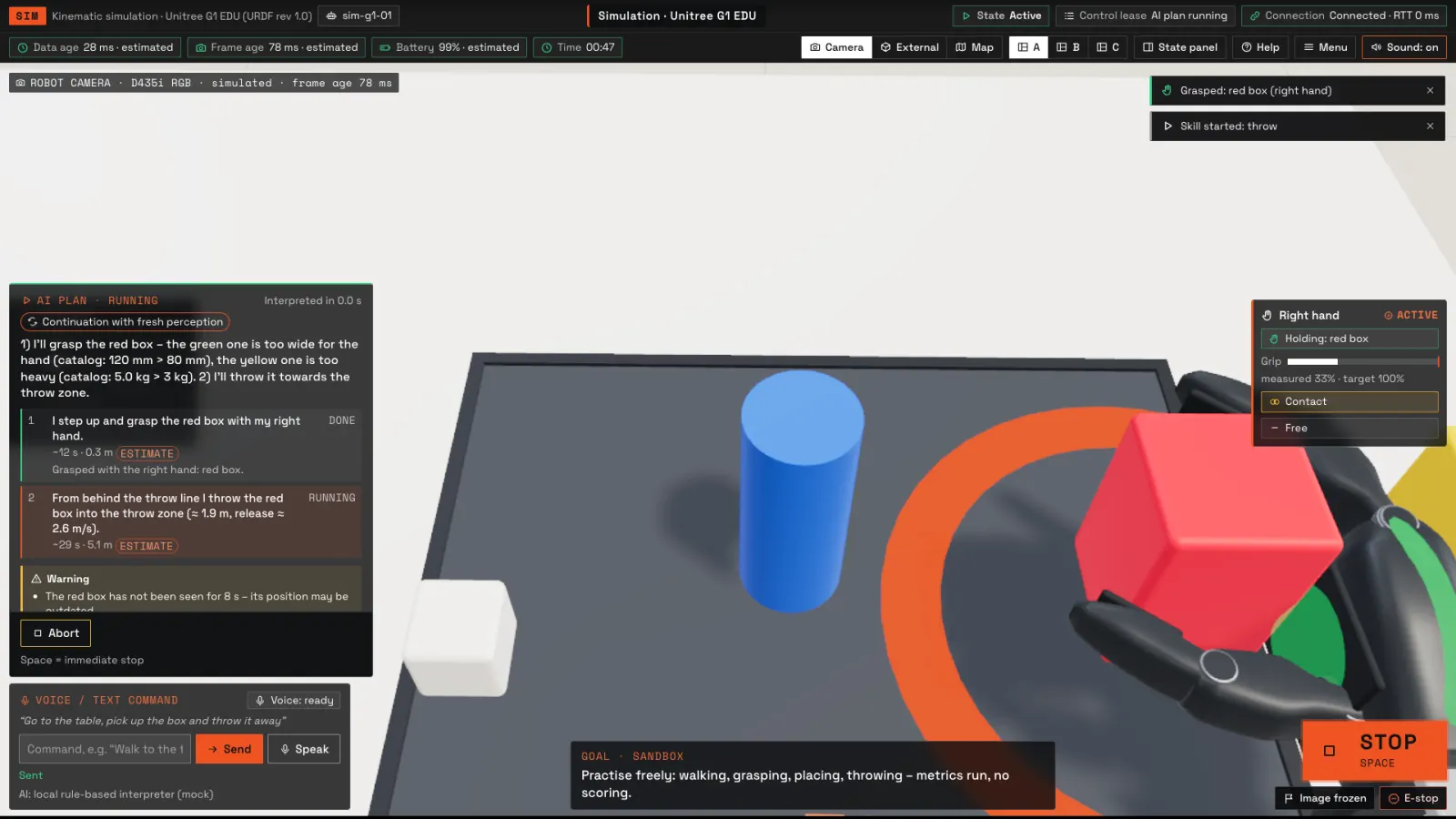 Simulation – real application recording
Turning your head can mean three different things
It can move the robot’s neck, a camera gimbal – or only the displayed view.
- NeckThe robot’s head turns; the camera really looks in a new direction.
- Camera gimbalOnly the camera turns; body and head stay put.
- View only (fixed camera)The G1 has no neck: turning your head gives no new real side view. The training shows exactly that.Unitree G1
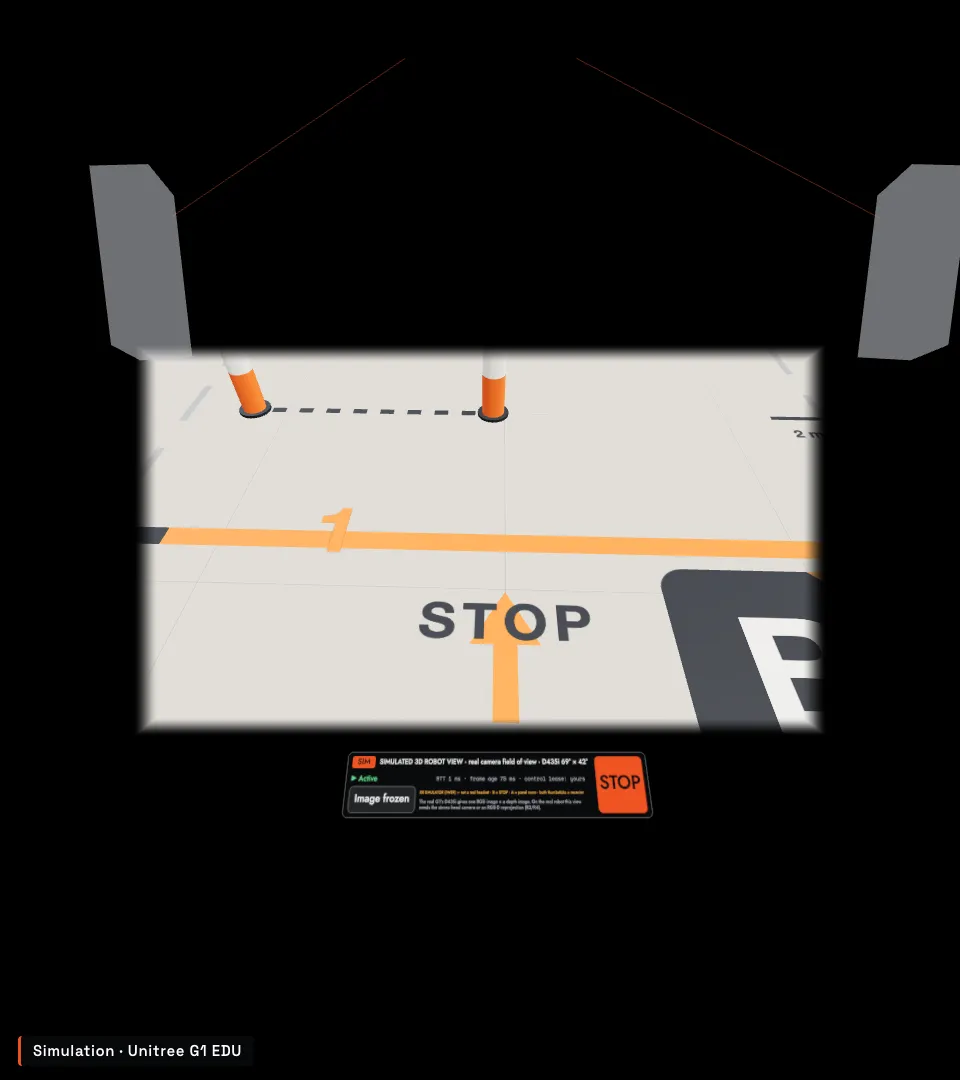 IWER emulator – not a real headset
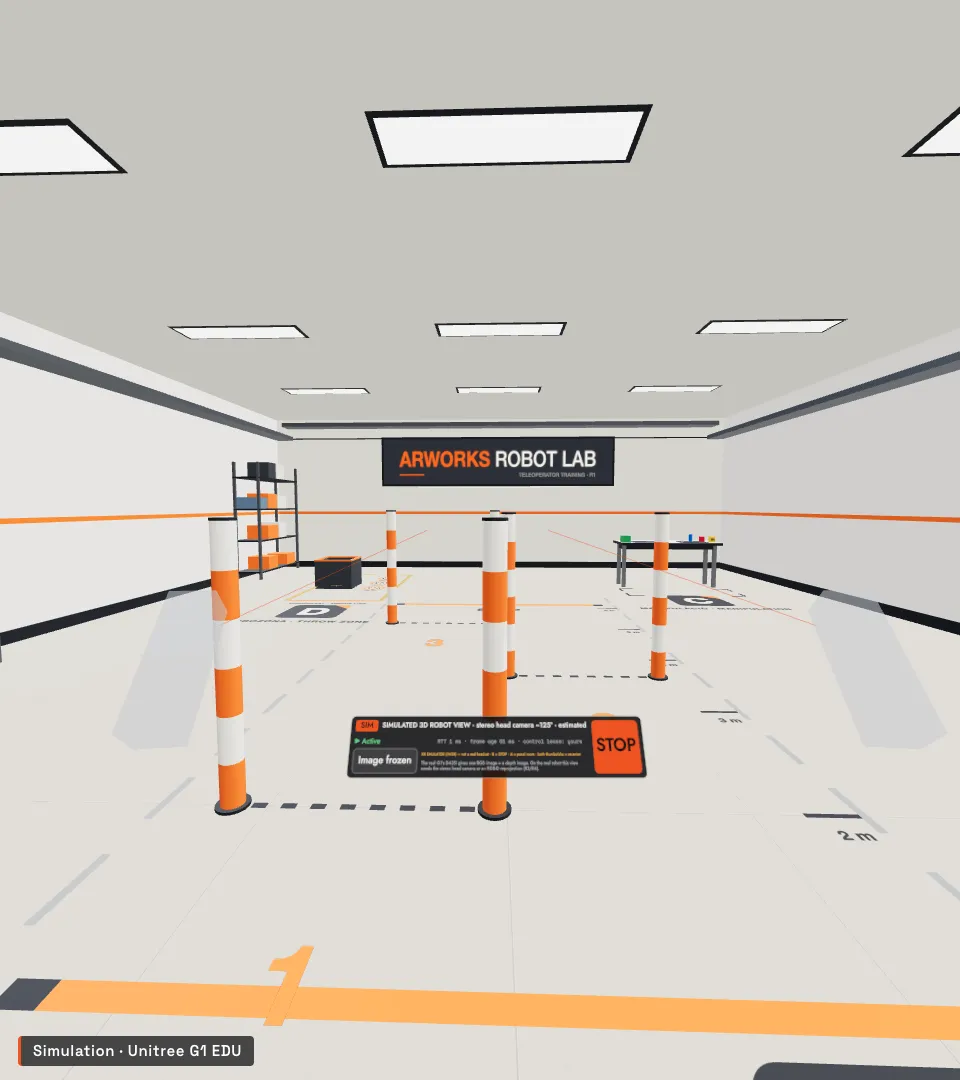
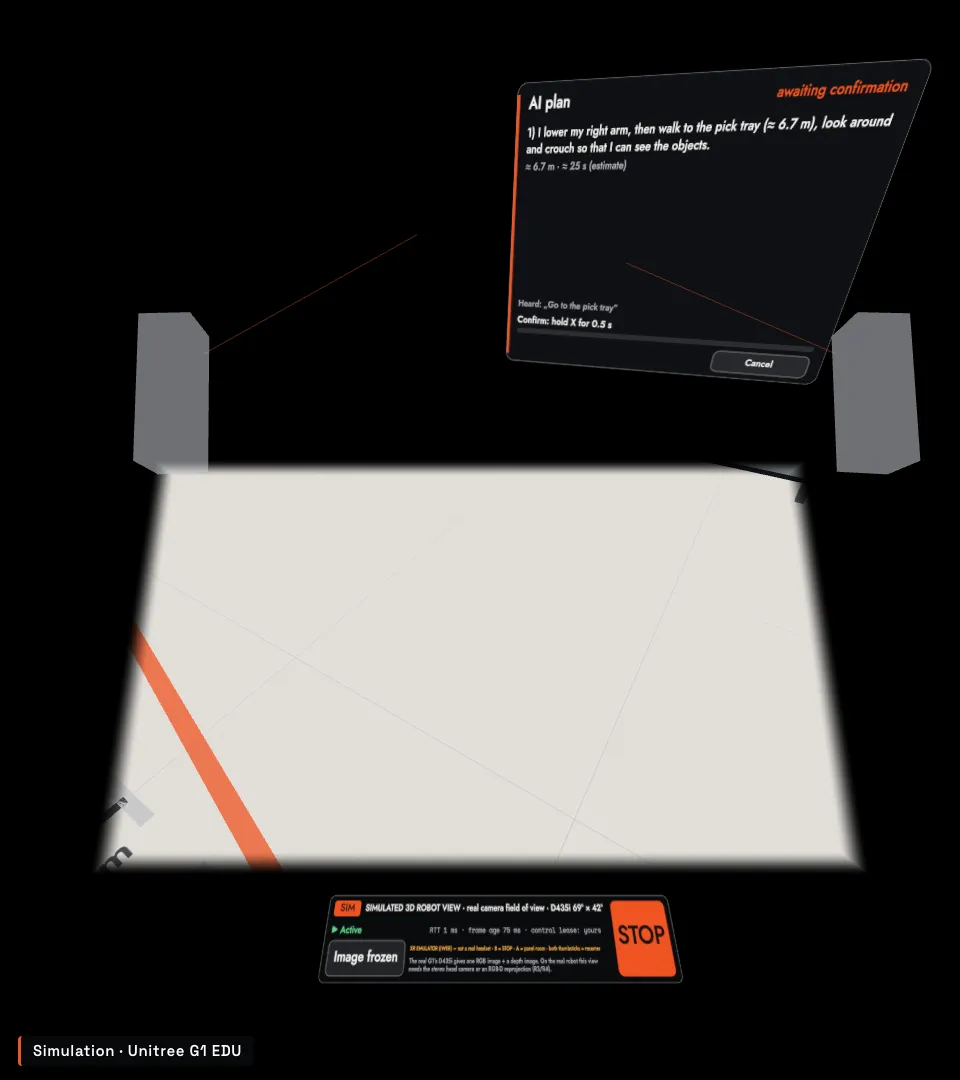
Other inputs, the same command gate
Each device connects through its own adapter, and each has its limits.
- Done in the trainingKeyboard and mouseFull control from a laptop; done in the training.
- Done in the trainingVR controllersClutch, trigger, thumbsticks; verified in the IWER emulator in the training.
- PlannedGamepadWalking and basic functions; limited for fine manual work.
- PlannedMobile phoneA supervision or limited control surface.
- PlannedBody tracking, IMU, gloveAn accelerometer alone gives no reliable 6DoF tracking: it needs more sensors, a reference and sensor fusion.
- PlannedBike-style controllerPedals become a velocity request, the handlebar a turn. A stopped pedal or a dropped Bluetooth link is a separate test case.
- Unitree xr_teleoperate — checked 2026-11-13
- Unitree unitree_sdk2 — checked 2026-11-13
- ARworks R1 teleoperator training – README, test report, protocol (2026-11-17) — internal documentation, not public
Which robot, for what task?
Tell us the robot model, the use case and the working environment – we prepare the first meeting from that.