← Solutions
Solution type

Digital Assistants

Conversational digital agents that answer questions, provide guidance or lead users through a process in text, voice or as a 3D character. The focus here is the interaction between the user and the assistant.

The problem it solves

On websites, at reception desks, in showrooms and at exhibitions, the same questions appear repeatedly while a human specialist may not always be available. A digital assistant can provide natural-language guidance, but it is only credible when it works from clearly defined knowledge and can signal uncertainty. If the main requirement is organising and searching large document collections, an AI knowledge system is the better starting point.

When it makes sense
Reducing repetitive work at reception or information points
Providing a product specialist at exhibitions
Answering internal questions in natural language
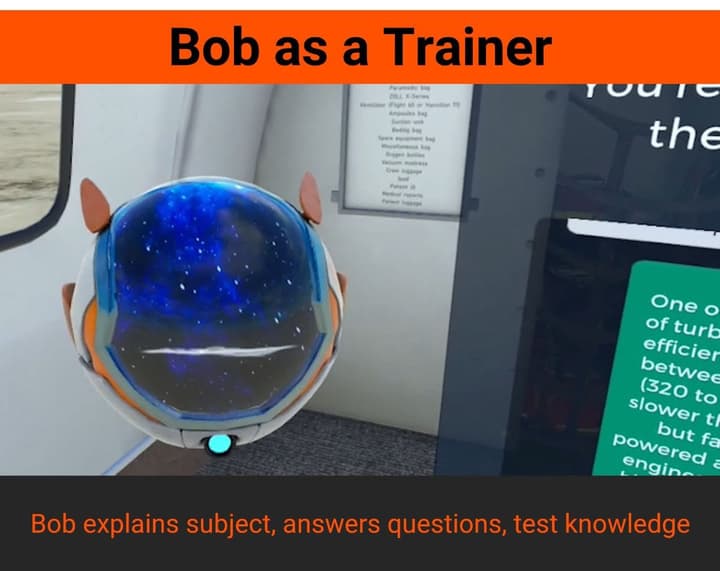
Creating an instructor or simulation character
Building a museum guide or historical character
Offering multilingual visitor or customer guidance
Key benefits
Natural-language access to complex information
Consistent answers across locations and interfaces
Text, voice and 3D character formats can be combined
Role and communication style can match the use case
Repetitive questions can require less staff time
Critical cases can be routed to a human handover
Limitations and design considerations

Assistant quality depends directly on the accuracy and maintenance of its knowledge base. Users should be clearly told that they are interacting with an AI system, and the design must cover questions for which no reliable answer is available. Healthcare, safety and other critical topics require human escalation. Conversation storage, access and personal-data handling also need explicit rules.
Related technologies
AIAI charactersVoice TechnologyTouchscreenVR
Typical features
Text conversation
Speech recognition and playback
3D character and animation
Multilingual operation
Controlled knowledge base
Uncertainty handling
Human handover
Conversation logs and analytics
Project examples
Related ARworks platforms
Q&A
What information can a digital assistant answer from?
The system can work from approved company documents, product data, manuals or structured data sources. Reliability improves when the organisation defines which sources are authoritative and how they are kept up to date. Access to the open web is a separate design decision because it introduces different verification, privacy and control requirements.
Can users speak to the assistant?
Yes. Speech recognition converts the user's voice into text, the AI prepares a response and text-to-speech can read it aloud. Voice use needs attention to background noise, response latency and personal-data handling. At exhibitions or other noisy venues, a text-based fallback is often useful even when voice is the primary interaction.
What happens when the AI is not sure of an answer?
A well-designed assistant should not respond confidently to every question. It can ask for clarification, state that it does not have enough information, show the relevant source or route the user to a human colleague. For critical workflows, this behaviour should be part of the original specification rather than an add-on introduced after launch.
Start an assistant projectReferences